Taraxacum officinale
Asteraceae

Description
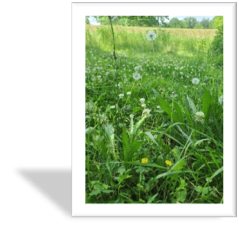
Dandelion is a perennial member of the Asteraceae family, originating in Europe and Asia. Also known as blowball, lion’s teeth, priest’s crown, or swine’s snout, it will generally thrive anywhere its seeds have chanced to land except in full shade. It seems to have a particular affinity for areas where its presence is unwanted by gardeners who clearly do not appreciate its optimistic disposition and medicinal gifts, but it prefers an aspect in full sun.
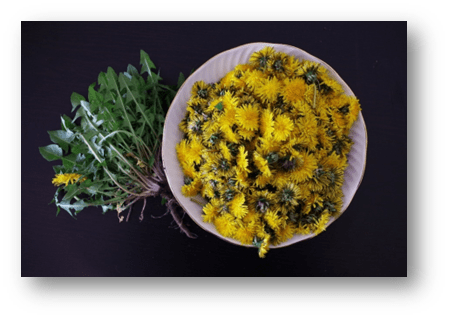
Dandelion is identifiable from a characteristic disc-like yellow to yellow-orange ½”-1” corolla which appears singularly atop a hollow, branchless stem, with layers of 40-100 florets radiating like the rays of the sun. The corolla matures into spherical, gossamer orb containing multitudes of tiny fruits which fly away with a disturbance from a gentle breeze or a blown breath. Grounded by deep taproot, several stems may rise from a rosette of lyrate and oblanceolate, oblong, or obovate, serrate or double serrate, basal, smooth leaves, whose angular teeth point back toward the taproot. If allowed to grow undisturbed, dandelions may reach a size of up to 16”x16” in an upright-to-spreading habit.
Close inspection may reveal subtle differences in leaf shapes among plants in one area versus another, including among plants appearing in the same yard. This is because the species called Taraxacum officinale is a botanical anomaly in which a single species envelopes a grouping of nine sections composed of several hundred ever-so-slightly different plants which are even-more-so difficult to distinguish as different.
Plant Parts Used: Leaf, root, and to a lesser extent, flowers (which are edible)

When and How to Harvest: Leaves for salads are best gathered in the spring while young; they become quite bitter the longer they are allowed to grow. Older leaves are more suitable for medicine. Dandelion has a long growing season, being one of the first plants to appear in spring. It will continue to bloom and produce new leaves through fall’s first freeze, especially if reinvigorated by frequent mowing. Roots should be harvested after the last mowing of the season when the plant has gone to seed. Although there is no danger of overharvesting dandelion, one should only harvest as much as can be processed or preserved in a timely manner.
Cautions for When Harvesting: When leaves first appear, they appear strikingly similar to the leaves of wild lettuce (Latuca spp.), however, upon appearance of the stem, one will be able to easily clarify the plant’s identity. The unbranching stem also distinguishes young dandelion plants from other young look-alikes such as spiny sow thistle, salsify, and hawksbeard, all of which are close relatives. Another commonly found look-alike is Carolina Desert-chicory, also known as Texas dandelion or false dandelion (Pyrrhopappus carolinianus), which initially appears in late spring with much taller stems and flowers which are usually a paler shade of yellow in color.
Preservation: Process or dry as soon as possible after harvesting. Roots may be used fresh or dried and may also be roasted (as a personal preference to enhance flavor).
Medicinal Information
Organ Affinities: Digestive system, urinary tract & kidneys, liver
Strength/Toxicity: Mild but powerful with no known toxicity hazards
Herbal Actions: Alterative; antibacterial; anti-inflammatory; antioxidant; bitter; cholagogue; digestive tonic; diuretic yet aquaretic (by sparing potassium loss); hepatoprotective; nutritive
Herbal Energies: Cooling, drying
Taste: Mildly bitter, similar to coffee (but different: more earthy and distinctly bitter)
Medicinal Constituents: Sesquiterpene lactones, triterpenoids, phenolic acids, carotenoids, inulin, pectin, linolenic-, linoleic-, & oleic acids, potassium, iron, and vitamins A, B, C, and D
Specific Indications: Spring tonic; liver issues, including jaundice & hepatitis; gall bladder issues; water retention; digestive stimulant; effective diuretic without risk of development of potassium deficiency; treatment for skin conditions arising from inadequate processing of toxins through the liver, such as eczema and acne (especially hormonal-cycle-related); blood purifier acting by decongesting the liver; disrupts biofilms, especially in a tincture for UTIs and other chronic infections involving biofilm-producing bacteria (it works well in formulas with uva ursi and baikal skullcap); possible aid in treatment of Type 2 diabetes; women’s issues including painful menopause, PMS, & menstruation; leaves in particular are effective in treating bed-wetting in children and incontinence in older adults; mild appetite stimulant
Cautions: Generally regarded as safe. Large doses may cause increase symptoms of gastric upset and/or inflammation.
Contraindications: Presence of obstructions of the gall bladder and/or bile duct
Traditional Uses: In traditional Western herbalism, dandelion was used as a general spring tonic for cleansing the liver, gall bladder, & spleen. It was used as a diuretic, for healing urinary ulcers & as a treatment for bed wetting. It was thought to help with malignancies and was also used as a sleep aid and as a fever reducer.
“It is of an opening and cleansing quality, and therefore very effectual for the obstructions of the liver, gall, and spleen, and the diseases that arise from them, as the jaundice and hypochondriac; it opens the passages of the urine both in young and old; powerfully cleanses [abscesses] and inward ulcers in the urinary passage, and by its drying and temperate quality doth afterwards heal them…”
– Nicholas Culpeper
Dandelion is associated with the sun in many cultures not just because of its appearance, but as correlated with the lion, considered the animal symbol for the sun. In traditional Cherokee medicine, dandelion (hu tsi la ha – “yellow flower”) is associated with the Medicine of the East, the direction representing the beginning of life. East Medicine is generally focused on female energy issues (emotional and physical) as well as childbirth. Dandelion tea is used after childbirth to aid a woman in regaining her strength. East Medicine is also focused on heart-related issues, and includes blood tonics and purifiers, and cleansers for clearing body toxins. The whole plant was historically used to treat heart problems.
Availability: Dandelion is abundantly available for responsible wildcrafting. Root is available from most reputable suppliers; bulk leaf is available from Frontier Co-Op.
| 3-Herb Base Formulas using DANDELION | ||||
| Part used | Synergist | Specific | Ratio | Purpose |
| Leaf | Self-Heal Prunella vulgaris | Parsley seeds Petroselinum crispum | 1:1:1 | Renal system support / support of elimination through the renal system |
| Root | Burdock Arctium lappa | Milk Thistle Silybum marianum | 1:1:1 | Liver detox and regeneration |
| Leaf & root 1:1 | Slippery Elm Ulmus spp. | Chamomile Matricaria chamomilla | 1:1:1 | Carminative digestive support |
| PREPARATION TECHNIQUES *The high inulin content of the root will not extract into EtOH and is best extracted in hot water. | ||
| Method | Instructions | Dosage |
| Infusion | 1 tsp (leaf) – 1 Tbsp (root)/cup | 4-8 oz 3X daily |
| Decoction | I Tbsp fresh or dried root/pint (Shane) | 2-4 oz 3X daily |
| Tincture | Fresh leaf or root at 1:2 in 30-95% EtOH (literature recommendations vary wildly – a personal preference will develop over time) | 5 ml 3X daily (as a general rule of thumb, 1 tsp [5 mL] 3X daily) |
| Dried leaf at 1:5 in 50% EtOH (Shane) | 2-5 mL 3X daily | |
| Fresh or dried leaf or root at 1:3 in 40% EtOH (Coffman) | 3-5 mL 2-3X dialy | |
| Fresh root at 1:2 in 30% EtOH (Easley & Horne) | 4-5 mL 3X daily | |
| Dried root at 1:4 in 50% EtOH (Shane) | not specifically listed in source | |
| Glycerite | Dried root at 1:5 in 60 % vegetable glycerin (Easley & Horne) | 1-3 mL 3X daily |
| Nutritive | Fresh young spring leaves and/or flowers may be eaten raw (they’re good in salads) or may be wilted like spinach or stewed with other greens | As needed for a spring tonic |
 Dragonfly Herbalist / Herbal Chemist